
Skills required in the most AI-exposed jobs are changing more than twice as fast as those in less AI-exposed roles.
PwC | 2026 AI Barometer
Average wage premium for jobs requiring AI skills.
PwC | 2026 AI Barometer
In the UAE, the most AI-exposed occupations require an average of 77 new skills, compared with 22 in the least exposed roles.
PwC | 2026 AI Barometer
AI users say their leadership is clearly and consistently aligned on AI.
Microsoft | Work Trend Index 2026
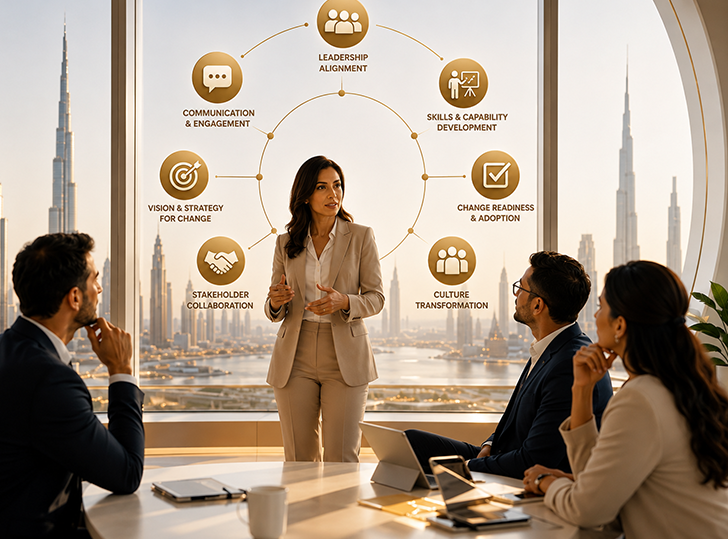


Prepare employees with the confidence, capability, and mindset required for evolving roles and new ways of working.

Build practical understanding of AI, responsible use, and its application across business functions.

Develop AI skills aligned with specific roles, workflows, and business priorities.

Activate transformation through stakeholder engagement, communication, change champions, and adoption planning.

Prepare employees to work effectively alongside copilots, AI agents, and intelligent systems.

Build a culture of continuous learning, experimentation, responsible use, and sustainable behavior change.
Organizations that invest in workforce capability and change are better positioned to accelerate adoption and sustain transformation over time.
Employees prepared to use AI effectively and responsibly in their day-to-day work.
Higher engagement and sustained use of AI-enabled tools, workflows, and processes.
Employees equipped with capabilities aligned to evolving roles and business needs.
Teams better able to adapt to changing technologies, priorities, and operating models.
A workforce committed to ongoing capability development and experimentation.
New behaviors and ways of working embedded beyond the initial implementation phase.

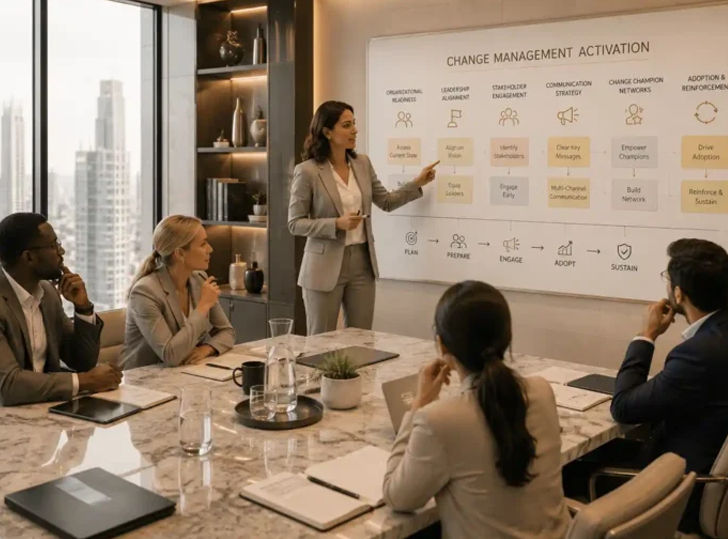
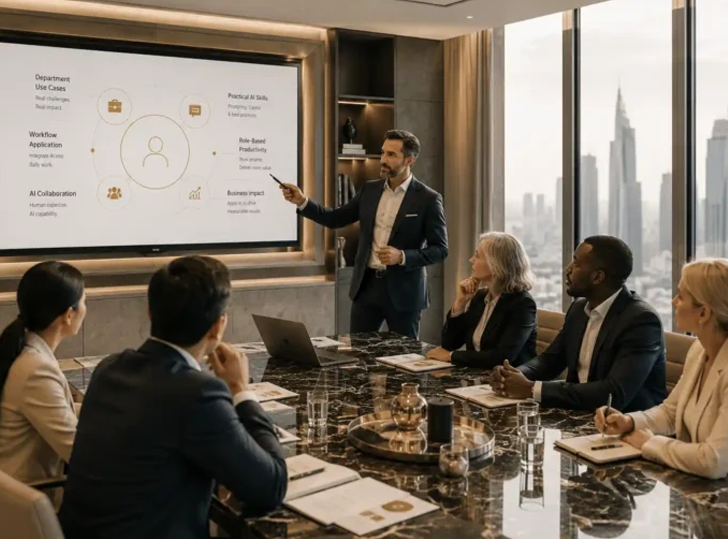
Digital Advice Consulting helps organizations move beyond one-time learning by building the workforce capabilities and change structures required for sustainable adoption.
Developing skills that employees can apply directly in their roles and workflows.
Putting employee readiness, confidence, and adoption at the center of change.
Tailoring capability building to real business functions and operational needs.
Connecting communication, stakeholder engagement, adoption, and reinforcement.
Building long-term organizational capability rather than short-term training activity.
Linking workforce initiatives to strategic priorities and measurable organizational outcomes.